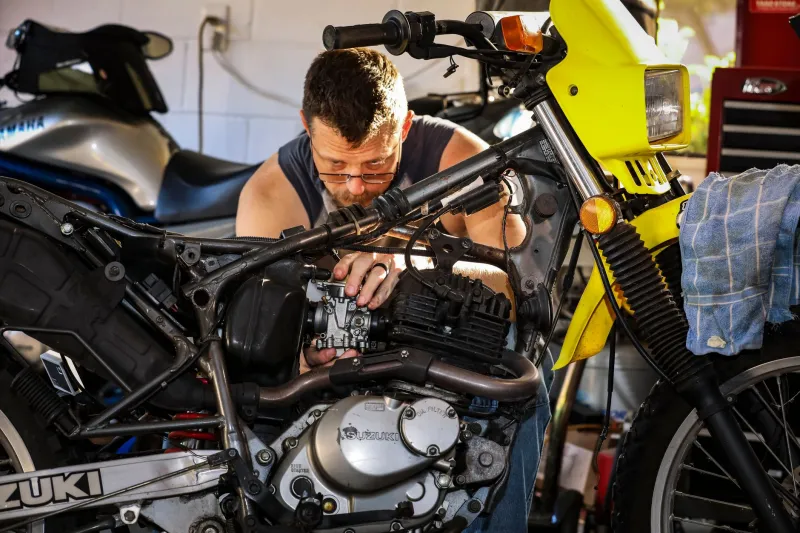
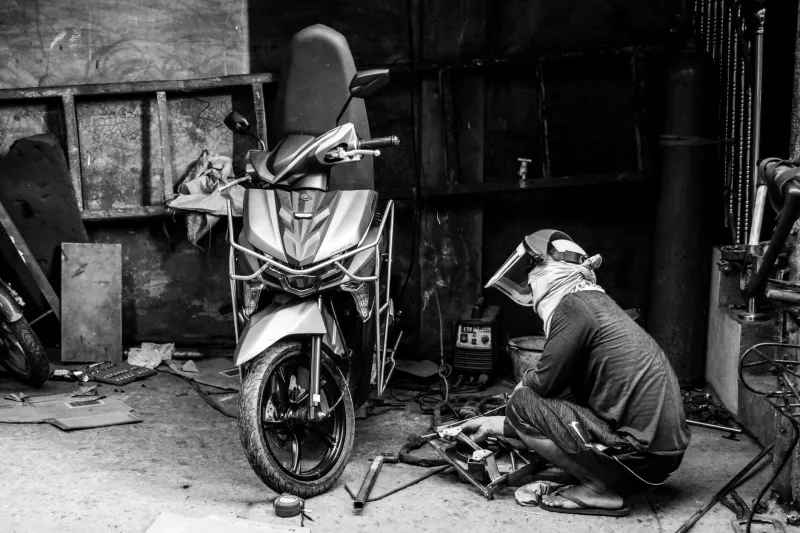
Throttle and Red Tape: The Battle Between Custom Bike Culture and City Hall

Photo by Photo by John Lucas on Unsplash on Unsplash
Let's be honest — nobody got into custom motorcycles because they wanted to spend their weekends reading municipal ordinances. But that's increasingly the reality for builders and riders in cities like Los Angeles, Denver, Portland, and Chicago, where local governments are tightening the screws on noise levels, exhaust emissions, and the kinds of modifications that have defined custom bike culture for decades.
This isn't a sky-is-falling piece. The custom scene is alive, it's growing, and it's not about to be regulated out of existence. But there's a real and widening tension happening between an enthusiast community that's expanding its footprint in urban spaces and a regulatory environment that's evolving fast — sometimes faster than riders realize.
What's Actually Changing on the Ground
The regulatory pressure isn't coming from one direction. It's a convergence of a few different trends.
Noise ordinances have gotten stricter in a number of major cities over the past several years, partly driven by the broader "quality of life" legislative pushes that followed pandemic-era shifts in urban living patterns. More people working from home means more people around to hear a loud pipe at 7 a.m. on a Sunday. That constituency has political weight, and local officials have noticed.
On the emissions side, California continues to set the pace — and not always in ways that are friendly to older or heavily modified bikes. The state's CARB regulations have long been a headache for custom builders, but stricter enforcement and expanded inspection programs are starting to catch up with bikes that previously flew under the radar. Other states, particularly those that have adopted California's emissions standards as a framework, are following suit.
Then there's the modification question. Street-legal requirements for lighting, mirrors, turn signals, and other equipment have always existed, but enforcement has historically been inconsistent. That's starting to shift in some urban markets, where law enforcement is paying closer attention to heavily modified machines — especially after high-profile incidents involving custom bikes in public spaces.
Riders and Builders on the Front Lines
The people feeling this most directly are the ones doing the building and the riding. We heard from several builders and everyday riders about how they're navigating the new landscape.
A builder based in Colorado told us he's had to completely rethink his exhaust fabrication process. "I used to build what sounded right. Now I'm building what can pass a sound meter check. It's a creative constraint, honestly, but it's also just reality. I want my clients to be able to ride their bikes without getting hassled."
A daily rider in Chicago described a recent encounter with police who cited him for a non-compliant exhaust on a bike he'd been riding for three years without issue. "Nothing changed about my bike. The enforcement just changed. That's a weird position to be in."
Not everyone is frustrated, though. Some builders see the regulatory pressure as a forcing function toward better craftsmanship. "If you're building something right," one West Coast fabricator told us, "it should be able to pass inspection. The builders who are complaining the loudest are usually the ones cutting corners."
That's a minority view in the community, but it's worth noting.
How the Community Is Pushing Back
Here's where things get genuinely interesting — and where the custom bike community is showing some real organizational muscle.
Groups like the Motorcycle Riders Foundation and various state-level motorcycle advocacy organizations have been increasingly active in pushing back against regulations they see as overbroad or poorly targeted. In several cities, rider coalitions have successfully lobbied for clearer enforcement standards, grandfather clauses for older builds, and more rider representation in the rulemaking process.
The American Motorcyclist Association has also been vocal about what it calls "arbitrary noise enforcement," pushing for standardized testing protocols rather than officer-discretion citations that can feel inconsistent and unfair.
Social media has become a surprisingly effective tool here. When a city proposes a new ordinance that affects riders, the mobilization can happen fast. Builders with large followings can amplify concerns to audiences that include local voters and, sometimes, sympathetic city council members.
What You Actually Need to Know
If you're building or riding a custom bike in an urban area, here's the practical reality check from the conversations we had.
Know your local standards. Noise and emissions regulations vary significantly from city to city and state to state. What's fine in rural Montana might get you a citation in downtown Austin. Do the homework before your build is complete, not after.
Document your compliance. If you're using aftermarket exhaust components or modified emissions equipment, keep records. CARB-compliant labels, receipts, and build documentation can make the difference between a quick inspection and a long argument.
Exhaust isn't the only issue. Lighting compliance — particularly LED conversions, headlight aim, and turn signal visibility — is getting more scrutiny in some markets. If your build is aggressive, do a walk-around against your state's equipment requirements.
Connect with your local rider community. The best intelligence on what's actually being enforced in your area comes from other riders. Local clubs, online forums, and regional riding groups are tracking this stuff in real time.
The Bigger Picture
Custom bike culture has always existed in a certain productive tension with mainstream norms. That tension is part of what makes it compelling. But the era of flying completely under the regulatory radar in urban environments is probably ending, and the community has a choice about how to respond.
The builders and riders who are engaging with the process — showing up at city council meetings, working with advocacy groups, making the case that the custom motorcycle community is a legitimate and economically significant part of urban life — are the ones likely to shape what comes next. The ones who ignore it until they get a citation are playing a losing game.
Custom bikes are built different. Defending the right to ride them might require thinking a little differently too.