Steel, Sweat, and Soul: Meet the Builders Reshaping American Custom Motorcycle Culture
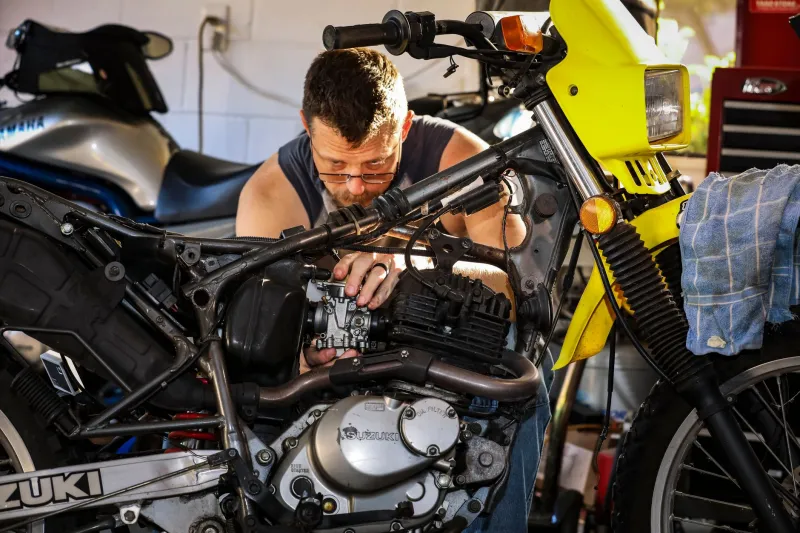
There's a moment every serious custom builder knows well. It usually happens somewhere around two in the morning, under fluorescent shop lights, with grease on your forearms and a half-finished frame sitting on a lift that doesn't quite work right. The bike isn't talking to you yet. It's just metal. And then — almost without warning — something clicks. A line reveals itself. A proportion snaps into focus. Suddenly you're not just building a motorcycle. You're chasing something.
That feeling is what separates the builders we're talking about from the folks bolting bolt-on parts onto stock frames and calling it custom. Across the country, from the Pacific Coast to the Gulf South, a dedicated community of craftspeople are doing the hard, slow, deeply personal work of creating machines that couldn't exist anywhere else. We spent time with a handful of them, and what we found was equal parts inspiring and humbling.
The Craft Isn't Dead — It Just Moved to Smaller Shops
If you were paying attention to the custom motorcycle world in the early 2000s, you might remember when the scene got loud. Television shows, celebrity builders, million-dollar price tags. It was flashy, and it brought new eyes to the culture. But a lot of veteran builders will tell you privately — and some not so privately — that era did as much harm as good. It commodified something that had always been stubbornly personal.
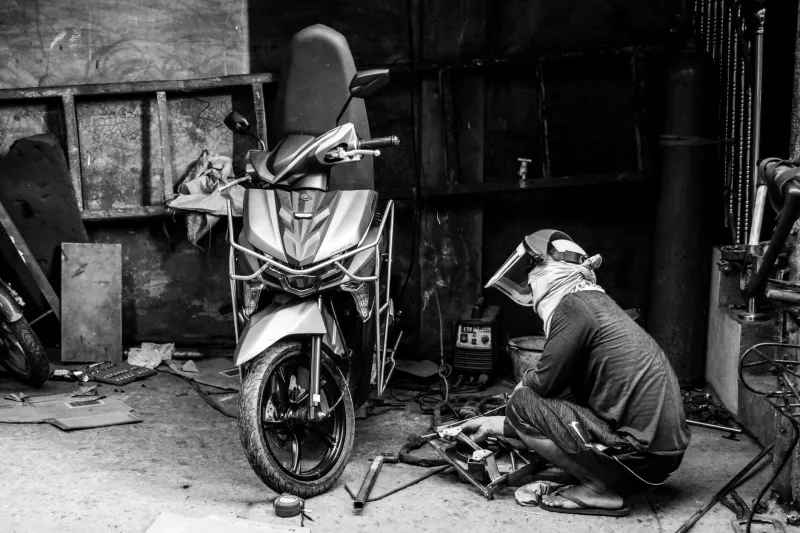
What followed was a quieter renaissance. Younger builders, influenced by everything from Japanese minimalism to Depression-era American bobbers, started working in obscurity by choice. Small operations with maybe two or three people on staff. Shops tucked behind auto body places in Albuquerque, or operating out of converted barns outside of Nashville, or running out of a rented bay in a shared space in Portland.
These builders aren't chasing TV deals. They're chasing the bike.
"I've turned down opportunities to scale up three times," says one Texas-based fabricator who's been building full custom choppers for going on fifteen years. "The minute you start hiring people just to fill orders, you stop being a builder and start being a manager. That's not why I got into this."
That sentiment echoes across the community. The builders doing the most interesting work right now are almost universally protective of their process — not because they're secretive, but because they understand that the process is the product.
Design Philosophy: Where Art Meets Engineering
Ask ten custom builders how they start a new project and you'll get ten completely different answers. Some sketch obsessively. Others work entirely in their heads, walking around a donor bike for days before picking up a tool. A few build from the wheel up — literally starting with tire selection and working backward through the geometry.
What the best of them share is an almost uncomfortable level of honesty about what a bike should do. Not just look like — do. A motorcycle that photographs beautifully but rides like a punishment isn't a success in their book. That tension between aesthetics and function is where the real skill lives.
One builder out of the Pacific Northwest — a former aerospace machinist who transitioned to full custom fabrication about eight years ago — talks about this in terms of "honest engineering." His frames are hand-built from chromoly steel, and every junction, every gusset, every tab is positioned with both structural logic and visual intention. Nothing is hidden that doesn't need to be. Nothing is exposed just for show.
"Mass production has to make compromises that handbuilding doesn't," he explains, running a hand along the downtube of a nearly finished hardtail. "When you're making thousands of something, you design for the average. When you're making one, you design for the specific. That specificity is everything."
The Personal Stories Behind the Machines
Custom building, at its core, is autobiography. The bikes that resonate most deeply — the ones that stop people cold at shows, that get shared endlessly online, that end up in serious collections — almost always carry the unmistakable fingerprint of someone's life story.
One builder in the Southeast started fabricating out of pure necessity. Couldn't afford the bikes he wanted, so he learned to build them. That background of working with limited resources shows up in his aesthetic: clean, purposeful, nothing wasted. His bikes have a leanness to them that feels earned rather than designed.
Another, based in the Midwest, came up through the hot rod world before transitioning to motorcycles in his thirties. His work carries that DNA — wide, low, with an attention to body lines that most pure motorcycle builders don't think about. He treats a tank the way a car customizer treats a hood. The result is bikes that feel like they belong to a slightly different universe than anything else on the show floor.
Then there are the builders who came out of the military, or out of blue-collar trades, or out of fine arts programs. Every background leaves a mark. Every set of hands builds differently.
What Separates Real Craft from the Imitations
This is the question that makes some builders uncomfortable, because nobody likes playing gatekeeper. But it's worth being honest about, because the custom market is flooded with bikes that look the part without doing the work.
The difference isn't always immediately visible. It lives in the fit of a hand-formed fender, in the radius of a bent tube, in the way a tank meets a frame without a gap or a shimmed spacer hiding a measurement error. It shows up in the ride — in geometry that was actually thought through versus copied from a catalog.
Most importantly, it lives in the relationship between builder and machine. When a builder has spent six months, a year, sometimes longer with a single motorcycle — has argued with it, lost sleep over it, rebuilt sections twice because they weren't right — that investment shows. You can feel it standing next to the bike before you ever throw a leg over it.
"Anyone can buy parts and put them together," one builder told us flatly. "That's assembly. Building is different. Building is when you make something that didn't exist before and couldn't exist without you specifically."
Hard to argue with that.
The Future of the American Custom Scene
The community is younger than it's been in decades, and more diverse. Women are building at rates the old guard never anticipated. Builders from outside the traditional Harley-centric world — working with vintage Japanese platforms, European twins, even electric powertrains — are expanding what "custom" even means.
The shops doing the most compelling work right now aren't trying to out-chrome each other or chase the biggest displacement numbers. They're asking harder questions about what a motorcycle can be, what it should say, who it should speak to.
America has always built its identity in part through its machines. The custom motorcycle world, at its best, is where that tradition stays honest — built by hand, ridden hard, and celebrated on its own terms.
Exactly the way it should be.