Dead Men's Bikes: The Art of Hunting Estate Sales and Auctions for Your Next Custom Platform
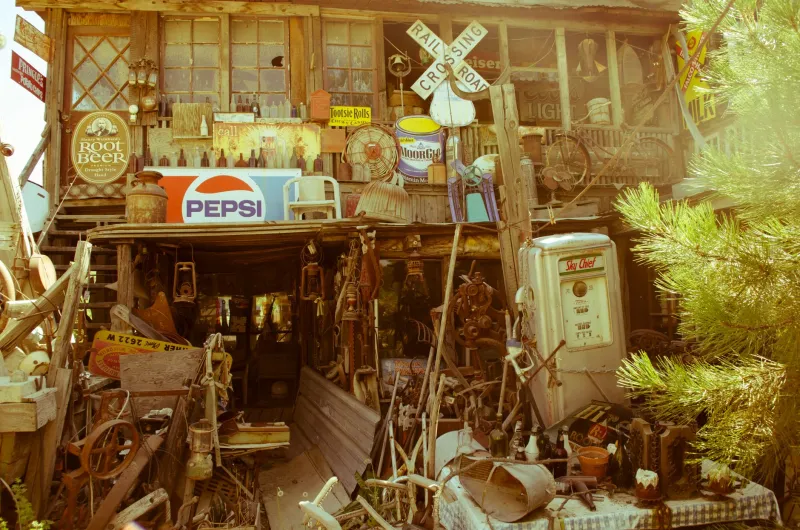
There's a certain kind of builder who doesn't walk into a dealership. Instead, they're scrolling estate sale listings at midnight, checking county auction schedules on a Tuesday, and driving three hours to look at a tarp-covered lump in someone's backyard. These are the hunters — and they're quietly sourcing some of the most interesting custom build platforms in the country for a fraction of what you'd pay retail.
It's not glamorous. But it works.
Why the Hunt Beats the Showroom
Let's be straight about the economics. A late-model Harley-Davidson Sportster or a Royal Enfield Meteor might make a perfectly serviceable donor bike, but you're paying market rate for a machine that hundreds of other builders are already eyeing. When you're starting a custom project, that premium matters — especially when most of the stock parts are heading straight to the shelf or the trash anyway.
Estate sales and auctions flip that equation. You're buying from people who often don't know what they have, or who simply need to liquidate fast. The result? Bikes that sell for hundreds instead of thousands, sometimes with decades of patina and original parts that actually add character to a build.
Terry Hollis, a custom builder out of Knoxville, Tennessee, has sourced every one of his last six projects from estate sales or county auctions. "I haven't paid more than $2,200 for a donor bike in four years," he says. "And two of those bikes went on to win awards at regional shows. People always ask where I find stuff like that. I tell them — you gotta be willing to go where nobody else wants to go."
Where the Good Iron Hides
So where do you actually look? The short answer: everywhere people aren't paying attention.
Estate sales are the most underrated source. When a longtime rider passes away, the family is often more focused on real estate and furniture than figuring out what a 1974 Honda CB550 is worth. Sites like EstateSales.net and Estatesale.com let you search by ZIP code and filter listings. The trick is to look for keywords like "garage contents," "tools and equipment," or even just "misc items" — bikes often get lumped in with lawnmowers and shop vac collections.
Police auctions and government surplus sales are another goldmine. Impounded bikes, abandoned property, and seized vehicles cycle through municipal auction systems constantly. GovPlanet.com and PublicSurplus.com list these regularly, as do individual county sheriff websites. The inventory is unpredictable and condition varies wildly, but the prices can be jaw-dropping.
Storage unit auctions — yes, like the reality show — occasionally yield motorcycles. It's a long shot, but buyers who frequent these events sometimes flip bikes they're not interested in, and you can catch them before the bikes hit eBay.
Private collections are the holy grail. Old riders accumulate machines the way some people accumulate books — with no real plan to stop. When a collection comes up for sale (often through word of mouth, Craigslist, or Facebook Marketplace), getting there first is everything.
The Negotiation Game
Showing up is only half the battle. Knowing how to talk price is the other half, and most experienced hunters have a methodology.
First rule: don't show enthusiasm. Maria Delgado, a custom builder based in Albuquerque who runs a small shop called Dustbone Cycles, says she's trained herself to treat every find with the same flat affect. "If you light up when you see something, you just gave away your leverage. I've learned to look at a beautiful old Triumph and say 'hmm, needs a lot of work' with a straight face. It's almost like acting."
Second rule: know your numbers cold before you walk in. Research the model, the year, the typical condition-based value, and the cost of parts you'll need. If you can articulate specific problems — and there are always specific problems — you have a basis for negotiating down.
Third rule: cash talks. Sellers at estate sales and private collections are often motivated by speed and simplicity. Showing up with cash in hand, ready to load the bike that day, closes deals that wire transfers and "let me think about it" never would.
The Thrill Nobody Talks About
Ask any serious hunter what keeps them doing it, and the answer usually isn't the money saved. It's the moment of discovery.
Terry Hollis describes pulling a tarp off a 1969 BSA Lightning in a rural Georgia barn two years ago. The family had no idea what it was — they were selling it as part of a lot of "old junk bikes." He paid $400 for three machines, the BSA included. "I sat with that bike for about ten minutes before I could even speak," he says. "It had been sitting there since 1983. The title was still tucked in the headlight bucket. That bike had a whole life I was never going to know, and now it was mine to give a new one."
That emotional weight is real, and it shapes the builds that come out of these finds. Builders who source this way often talk about wanting to honor the machine — not erase it. The history embedded in worn grips, faded paint, and period-correct hardware becomes a design element rather than a problem to fix.
The Circular Economy Angle
There's something bigger happening here too. The custom motorcycle community has quietly built its own circular economy — one where forgotten machines get rescued, repurposed, and celebrated rather than crushed or left to rot. Parts that come off donor bikes get sold to other builders. Frames get repaired instead of replaced. Knowledge about obscure models gets shared freely on forums and in shop bays.
It's not organized, and nobody's calling it sustainability — but that's essentially what it is. Every barn find that becomes a show bike is a small act of preservation dressed up as customization.
Getting Started
If you've never hunted for a donor bike this way, start small. Set up alerts on EstateSales.net for your region. Bookmark your county's auction page. Tell every rider you know that you're looking — word of mouth still moves faster than any algorithm.
Be patient. Be picky. And when you finally pull that tarp back and see something worth saving, stay cool.
The bike's been waiting long enough. You can celebrate later.