Built to Last or Built to Lose: The Cold Truth About Custom Motorcycle Resale Value
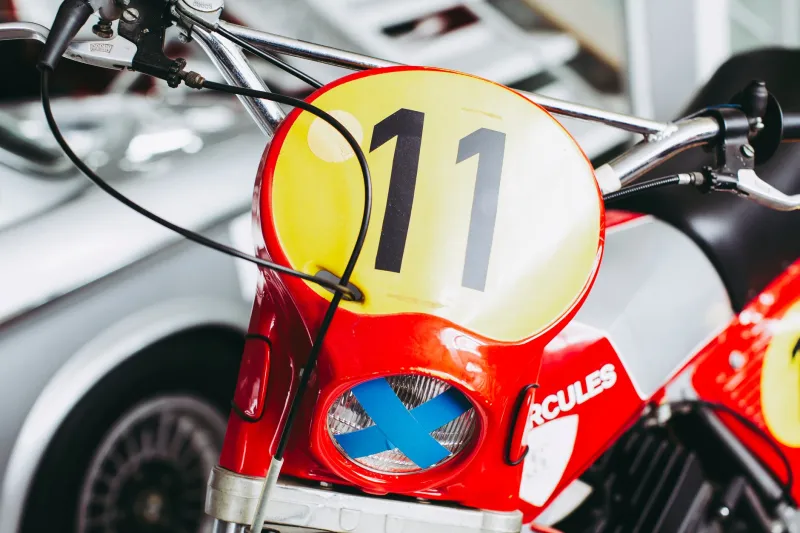
You poured $40,000 into a one-off custom. Hand-fabricated frame, bespoke tank, a motor that took three months to source. The build was everything you wanted. Then life happens, and suddenly that machine is sitting on Bring a Trailer with a reserve nobody's meeting.
Welcome to the secondary market for custom motorcycles — one of the most unpredictable corners of the entire automotive world.
Unlike production bikes, where depreciation curves are relatively predictable, customs operate in a market defined by taste, reputation, and timing. Get those three things right, and a well-built custom can actually appreciate. Get them wrong, and you're lucky to recover fifty cents on the dollar.
Why Most Customs Crater
The core problem is simple: custom motorcycles are deeply personal objects built for one person's vision, then expected to appeal to a much wider audience on resale. That gap between creator intent and market appetite is where value goes to die.
Mike Donahue, a pre-owned bike specialist out of Phoenix who's moved hundreds of customs over the past decade, puts it bluntly. "I see it constantly — guys build exactly what they want, spend real money doing it, and then act shocked when buyers aren't lining up. The bike was built for them. Not for the market."
Trend-chasing compounds the problem. A hyper-aggressive bagger build that felt cutting-edge in 2018 can look dated fast. Same goes for any style that peaks hard and then fades — certain stretched chopper aesthetics, ultra-wide rear tire builds, even some cafe racer interpretations that got oversaturated. When the cultural moment passes, the resale window narrows dramatically.
Condition matters too, but maybe not in the way you'd expect. Customs that have never been ridden — the garage queens — often suffer on the secondary market as much as bikes with high miles. Buyers get nervous. A bike that's never been ridden raises questions about whether it actually works properly, or whether the owner was too precious about it to ever truly dial it in.
The Builders Whose Bikes Actually Hold
Not all customs depreciate into oblivion. There's a clear tier of builders whose work consistently performs on the secondary market, and the reasons why are worth understanding.
Reputation is the biggest driver. Shops like Confederate Motorcycles (now Curtiss Motorcycles), Roland Sands Design, and Indian Larry Motorcycles carry name recognition that translates directly into resale premiums. When a buyer is spending serious money on a used custom, they're not just buying the bike — they're buying the story, the provenance, the ability to tell people who built it. A documented build from a nationally recognized shop functions almost like a certificate of authenticity.
Jordan Whitfield, a consignment specialist at a Scottsdale-area auction house that handles high-end motorcycles, has watched this play out repeatedly. "A bike with a builder name attached to it, with full documentation and original components, will outperform an anonymous build of identical quality every single time. The name is doing real work in the price."
Originality is the second major factor. Customs that have been modified after the original build — even with upgrades — tend to take a hit. Buyers in this space want the builder's vision intact. The moment someone starts swapping handlebars, changing the exhaust, or repainting, they're diluting what made the bike valuable in the first place. This is counterintuitive to a lot of riders who think improvements should add value. In the custom world, they often don't.
The Documentation Factor Nobody Talks About
One of the most consistent findings across every dealer and seller we spoke with was the outsized impact of paperwork — build documentation, receipts, photos of the process, and clear title history.
It sounds unsexy. But in a market where buyers are spending $25,000 to $80,000 on a used motorcycle with no manufacturer warranty and no standardized inspection process, documentation is everything. It answers the question every buyer is quietly asking: Can I trust this thing?
Builders who photograph every stage of a build, document parts sourcing, and provide buyers with a complete history are essentially giving future owners a resale asset. Shops that treat documentation as an afterthought are quietly killing the downstream value of their own work.
Timing the Market — And Why Most Sellers Don't
Custom motorcycle culture moves in cycles, and resale success often comes down to whether a seller is paying attention to those cycles or not.
Bobbers had a moment. Scramblers had a moment. Flat-trackers are having a moment right now. Selling into a trend is dramatically more profitable than selling out of one. The problem is that most people selling customs are doing so because of life circumstances — financial pressure, a move, a change in priorities — not because they've identified an optimal market window.
The sellers who consistently do well are the ones who built with an eye toward longevity rather than trend-chasing from the start. Timeless proportions, quality components from recognizable suppliers, and a coherent aesthetic that doesn't scream "this was built in a specific year" all contribute to sustained desirability.
What Smart Buyers Are Looking For
If you're on the buying side of the secondary custom market, the calculus is actually pretty straightforward once you know what to look for. Builder reputation, documentation, originality, and whether the bike's aesthetic feels durable or dated are your four pillars.
And then there's what Donahue calls the "cool factor" — the thing that's genuinely hard to quantify but you know when you see it. Some bikes just have a presence that transcends trends. They photograph well, they attract attention in parking lots, they make people stop and look. That quality doesn't depreciate. If anything, it appreciates.
The custom motorcycle secondary market rewards bikes that were built with integrity and sold with transparency. Everything else is a gamble — sometimes a fun one, but a gamble all the same.