Bolt It On, Rip It Off: The Costly Cycle of Chasing Trends in Custom Building
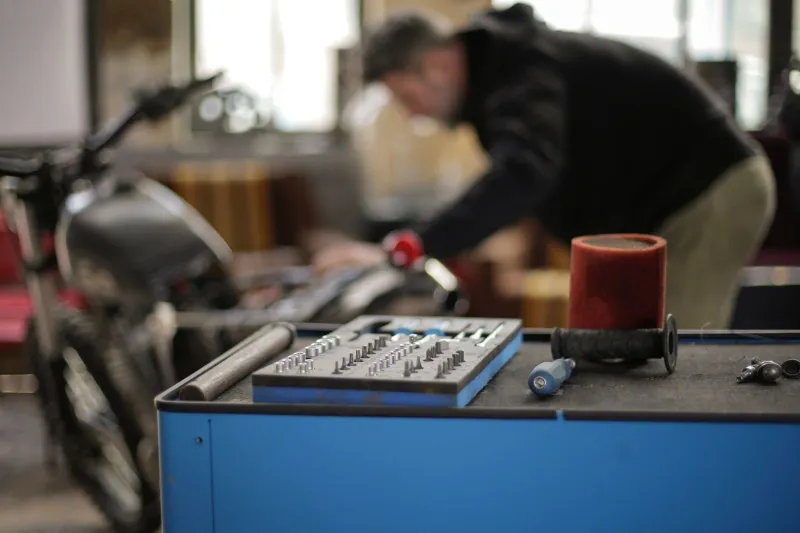
Every serious builder has that corner. Maybe it's a shelf, maybe it's a milk crate, maybe it's just a sad pile shoved under the workbench. It's where the mistakes live — the $600 drag bars that destroyed your wrist after forty miles, the velocity stacks that looked incredible in photos and turned your carburetion into a guessing game, the fender delete kit that made every wet road a personal car wash. Welcome to the mod graveyard. Population: most of us.
The uncomfortable truth is that a huge percentage of the modifications custom builders bolt onto their bikes never survive past the second riding season. They get pulled, sold for pennies on the dollar, or quietly donated to someone else's graveyard. The money doesn't come back. The time doesn't either. And yet the cycle repeats itself every spring, fueled by fresh builds on the feed and the eternal optimism of a new riding year.
So what's actually going on here, and how do you break out of it?
The Psychology of the Impulse Upgrade
Let's be honest about how most modification decisions actually get made. You're scrolling at midnight. You see a build that stops you cold — some chopped tracker out of the Pacific Northwest with a set of clubman bars so low they're practically floorboards, and it looks absolutely mean. You find the parts. You check your PayPal balance. Two weeks later, you're in the garage with a torque wrench and a YouTube tutorial.
That's not a build process. That's a mood.
The psychology behind impulse upgrades is well-documented in consumer behavior research, even if nobody's publishing papers specifically about motorcycle culture. We're wired to respond to visual reward. A great-looking build triggers genuine excitement, and that excitement gets attached to the parts rather than the whole. We're not buying clubman bars — we're buying the feeling of that bike we saw. The problem is the feeling doesn't transfer. Your riding position, your frame geometry, your body proportions, your typical road conditions — none of that showed up in the photo.
Riders who've been through multiple build cycles tend to describe the same pattern. Marcus D., a builder out of Austin who's been turning wrenches on vintage Hondas for over a decade, put it plainly: "I used to build for the show, then ride it and hate it, then fix it to actually work. I was basically paying twice for every bike."
That double-payment model is more common than most builders want to admit.
Form Versus Function: The Real Diagnostic
The cleanest way to evaluate any potential modification is to ask one honest question before you pull the trigger: does this change how the bike behaves, or does it change how the bike looks?
Neither answer is automatically right or wrong. There's nothing wrong with aesthetic modifications — this is custom building, not engineering school. But you need to know which category you're in, because they carry completely different risk profiles.
Functional upgrades — suspension work, brake improvements, carb tuning, proper lighting — tend to stick. They solve problems you can feel every time you ride. A set of upgraded fork internals doesn't photograph well, but it changes the character of the bike in a way that makes you want to keep riding it. Those mods stay.
Pure aesthetic upgrades live and die by your taste, and taste is a moving target. The problem isn't that you want your bike to look good. The problem is that aesthetic trends in custom culture move fast, and what reads as fresh and intentional one season can feel dated or derivative eighteen months later. That's when the ripping-off begins.
The most dangerous category is the modification that pretends to be functional but is really aesthetic. Velocity stacks are a classic example. They look mechanical and purposeful — all that exposed aluminum, the industrial geometry. But on a street bike running a stock or mildly modified carb, they often introduce more problems than they solve. Same with certain exhaust configurations that are sold on performance claims but are really just noise makers with paperwork.
Real Numbers From Real Bikes
It's worth looking at what this actually costs over time. Take a mid-range build — let's say a CB750 or an older Sportster, a platform that's been the backbone of the American custom scene for decades. A builder putting together a serious custom over two to three years might spend anywhere from $4,000 to $12,000 in parts above the purchase price, depending on how deep they go.
Of that spend, a realistic estimate from experienced builders is that somewhere between 30 and 50 percent of parts get replaced or removed before the build is considered "done" — and that's being generous. That's potentially $2,000 to $6,000 in parts that got bolted on and pulled back off. Some of it gets sold. Most of it sells for a fraction of purchase price, especially if it was installed and removed. Used custom parts are a brutal resale market.
Jamie R., a builder and occasional wrench-for-hire out of the Chicago area, keeps a running log of every part she's ever purchased for her builds. "I started doing it because I wanted to know my actual costs," she said. "What I found out is that I'd spent almost as much on stuff I took off as I did on stuff that stayed on. It was a real come-to-Jesus moment."
Building a System That Protects You From Yourself
The builders who manage to break this cycle tend to share a few habits that are worth stealing.
Ride it before you change it. This sounds obvious, but a lot of builders start modifying before they've put serious miles on the stock or near-stock machine. You can't know what needs fixing until you know what bothers you. Put at least a full season on the bike before you touch anything cosmetic.
Define your riding reality. Are you primarily doing weekend canyon runs, commuting, long-distance touring, or show riding with minimal actual miles? Be honest. A lot of uncomfortable modifications get installed because the builder imagined a riding life they don't actually live. Low bars are cool until you're on the highway for two hours.
Build a waiting list, not a cart. When you see something you want to buy, write it down and wait thirty days. If you still want it after thirty days and you can articulate why it improves the specific riding experience you actually have, buy it. If you can't explain it beyond "it looks right," hold off.
Talk to people who've already done it. The forums are full of honest post-mortems from builders who've been through exactly the modification you're considering. The custom community is generally generous with hard-won knowledge. Use it.
The Graveyard Is Trying to Tell You Something
If you've already got a pile of pulled parts gathering dust, don't just see it as money lost. See it as data. Look at what you bought and removed. Is there a pattern? Were you chasing a specific aesthetic? Responding to what was trending in the builds you were following? Trying to solve a comfort problem with a cosmetic fix?
That graveyard is a map of your decision-making process. Study it. The next build you do — or the next modification you make to your current one — will be better for it.
Building a custom motorcycle is supposed to be about expressing something real. The best builds have a coherence to them, a sense that every choice was intentional and personal. That coherence doesn't come from chasing what's hot. It comes from knowing what you actually want from a bike and building toward that, one honest decision at a time.
Your parts bin doesn't have to keep growing. But it will, until you get honest with yourself about why you're really bolting things on.