Half-Built and Haunted: Why Great Custom Bike Projects Never Make It Out of the Garage
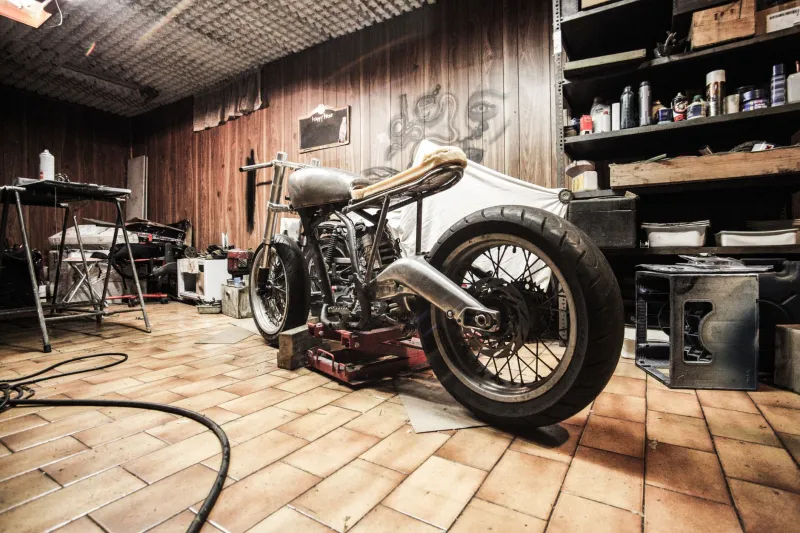
Walk into enough garages across this country and you'll start to notice a pattern. Somewhere between the tool chest and the back wall, there's almost always a motorcycle in pieces — tank off, wiring half-stripped, frame sitting on a jack stand like it's been waiting for something that isn't coming. The owner will wave at it casually, maybe laugh a little, and say something like, "Oh yeah, I'm getting back to that one soon."
Soon. The most expensive word in custom building.
Abandoned builds are the dirty secret of the custom motorcycle world. We celebrate the finishers — the gleaming, show-ready machines that pull crowds at events and rack up likes online. But nobody really talks about the graveyard of half-realized visions sitting in garages from Portland to Pensacola. The truth is, more custom builds die from psychological causes than mechanical ones. And until builders start treating the mental side of the process as seriously as the technical side, a lot of great ideas are going to keep collecting dust.
The Decision Spiral That Kills Momentum
Ask most builders where their project stalled and they'll point to a decision — one specific fork in the road where the options multiplied faster than the answers. Do you go hardtail or keep the rear suspension? Carbureted or fuel-injected? Fabricate the tank or source a vintage one? Each question sounds manageable in isolation. But custom builds don't ask questions in isolation.
"I had the frame stripped and prepped, and I just couldn't commit to the tank shape," says Marcus T., a hobbyist builder out of Nashville who spent fourteen months on a Sportster project before parking it indefinitely. "I'd find a tank I liked, then second-guess it, then find another one. Meanwhile, nothing else was moving forward because everything downstream depended on that one call."
This is decision paralysis in its purest form, and it's remarkably common among builders who care deeply about their work. Ironically, the more invested someone is in a project, the harder individual choices become. The stakes feel higher. Every decision carries the weight of the whole vision.
Professional builders tend to sidestep this trap through a combination of experience and deadline pressure. When you're building for a client or for a show date, you make the call and move on. Hobby builders don't have that external pressure, so the spiral can go on indefinitely.
Perfectionism Is a Project Killer
There's a specific kind of builder who can spend six months on a weld bead. Not six months welding — six months thinking about the weld bead. Researching techniques, watching videos, buying equipment, second-guessing the equipment, returning the equipment, buying different equipment. The actual welding might take twenty minutes. Everything leading up to it can consume a season.
Perfectionism gets romanticized in custom culture. We talk about craftsmen who obsess over details, and there's real value in that obsession when it's channeled productively. But perfectionism without forward momentum isn't craft — it's avoidance dressed up in quality control.
"I've watched guys tear apart work that was genuinely excellent because they convinced themselves it wasn't good enough," says Dena R., a professional fabricator based outside of Denver who also mentors newer builders. "At some point you have to recognize that 'good enough to be great' is still great. Chasing perfect is how you end up with a parts collection instead of a motorcycle."
The psychological mechanism here is self-protection. If you never finish, you never have to submit your work to judgment. The unfinished build remains full of potential. Completing it means finding out what it actually is — and that's terrifying for builders who've tied their identity to the project.
Budget Burnout and the Slow Fade
Not every stalled project is a psychological drama. Sometimes the money just runs out, and the build goes on hold while real life catches up. Medical bills, a job change, a move — the financial disruptions that derail custom projects are the same ones that derail everything else in adult American life.
The problem is that "on hold" has a way of becoming permanent. When a build sits long enough, the emotional connection starts to weaken. Parts sourced with excitement start to feel like clutter. The vision you had eighteen months ago doesn't fit who you are today. And starting back up requires not just money, but a fresh re-engagement with the whole project — which is its own kind of labor.
Builders who successfully navigate financial interruptions tend to do a few things differently. They document obsessively before stopping — photos, notes, part numbers, unfinished decisions — so restarting doesn't mean starting over mentally. They also set a specific re-entry trigger rather than a vague "when things settle down." Waiting for life to settle down is waiting forever.
What Separates Finishers from the Rest
Spend time around builders who consistently get projects across the finish line and a few traits show up repeatedly. They break builds into phases with concrete endpoints. They're willing to make imperfect decisions and revisit them later if needed. They talk about their projects publicly — to friends, in forums, at local meetups — because external accountability creates real pressure to keep moving.
They also know when to ask for help. One of the loneliest traps in custom building is the solo grind — the idea that a "real" builder handles everything themselves. That mythology keeps a lot of builders stuck on problems that a single conversation with the right person could solve in an afternoon.
"I was spinning on an electrical issue for two months," Marcus says of a later project he actually finished. "Finally posted about it in a forum and had three solid answers within a day. I wasted sixty days being stubborn about figuring it out myself."
Getting Unstuck: Practical Moves That Actually Work
If you've got a ghost build haunting your garage right now, a few concrete approaches can break the inertia.
Set a stupid-small goal. Not "finish the wiring harness" — more like "label every wire coming off the ignition switch." Momentum is momentum, and tiny wins rebuild it.
Make one irreversible decision. Commit to something that can't easily be undone. Order the tank. Cut the frame. Irreversibility forces the project forward in a way that reversible choices never do.
Give the project a deadline with consequences. Enter a show. Tell your riding crew the bike will be ready for a specific trip. Create stakes that exist outside your own head.
Audit what you actually have. Sometimes a build stalls because a builder has lost track of what's done, what's missing, and what's next. A full inventory — physical and written — can reframe the project as more manageable than it feels.
Consider the cost of not finishing. Not just the sunk money, but the mental real estate the unfinished build occupies. Half-built bikes are heavy things to carry around, even when they're sitting still.
The Build Deserves Better
Every stalled project started as a genuine idea — something a rider saw clearly in their head and wanted to bring into the world. That vision deserves more than a slow fade into a parts pile. The mechanical challenges in custom building are real, but they're learnable and solvable. The psychological ones are sneakier, and they don't get better on their own.
The bikes that make it to the road — the ones that get ridden hard and celebrated here — are almost never the product of a perfect process. They're the product of builders who kept going anyway, made the imperfect call, asked for help when they needed it, and refused to let the garage ghost win.
Your build deserves that same stubbornness. So does your garage floor.