Your Bike Sounds Like a Lawn Mower and You Don't Even Know It: The Exhaust Note Problem in Custom Building
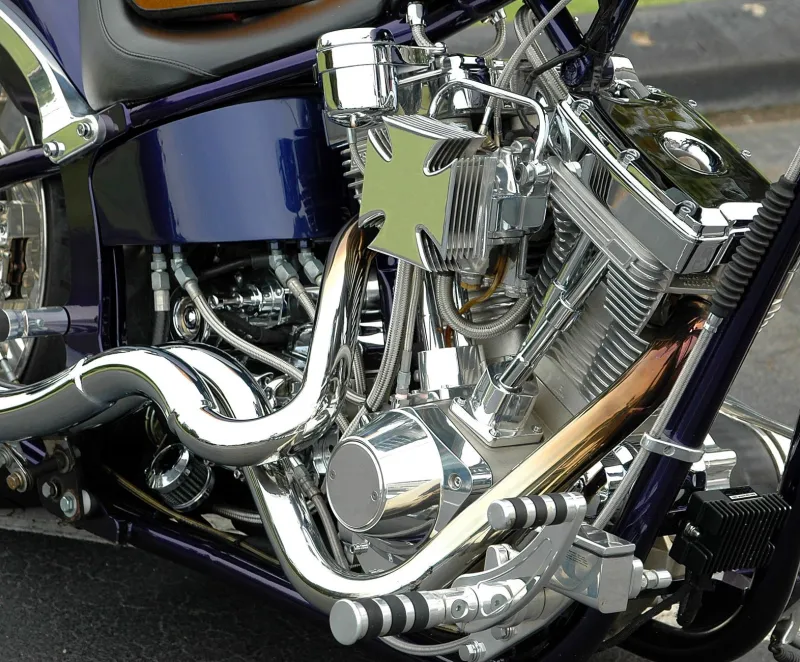
Picture this: a stunning custom motorcycle rolls into a show. The paint catches the light perfectly. The fabrication is immaculate. The stance is dialed. People are reaching for their phones before it even stops moving. Then the builder blips the throttle — and it sounds like a weed whacker with ambitions.
It happens more than anyone in the custom world wants to admit. And it matters more than most builders are willing to acknowledge.
"Sound is the first thing that gets cut when someone's trying to hit a budget," says Darnell Okafor, a master fabricator who's been building out of his Detroit shop for over fifteen years. "Guys will spend six grand on a custom tank and then slap on whatever exhaust they found on eBay because it looks close enough. And then they wonder why the bike doesn't feel right, even when it looks perfect."
The exhaust note isn't decoration. It's the voice of the machine. And a lot of custom builders are sending their bikes out into the world effectively mute.
Why Sound Gets Ignored
The custom motorcycle world is visually driven, and that's not going to change. Instagram, show judging, magazine spreads — all of it rewards what you can see. Sound doesn't photograph. It doesn't render well in a YouTube thumbnail. It's ephemeral in a medium that rewards permanence.
But anyone who's stood next to a bike with a genuinely exceptional exhaust note knows the difference. There's a physical dimension to it — you feel it in your chest, in your teeth, in the ground under your boots. A great exhaust note doesn't just announce the bike; it defines it. It's the reason a vintage Ducati bevel-drive twin sounds like an event and a badly-piped sportbike sounds like an argument.
The problem is that most builders treat exhaust selection as an aesthetic decision — does it look right? — rather than an acoustic one. Pipe diameter, collector design, baffle configuration, header length, the material of the muffler casing — all of these variables shape the sound. Ignore the acoustics and you're essentially designing a guitar by how it looks without caring whether it's in tune.
The Physics Nobody Wants to Study
Here's the part that makes most builders' eyes glaze over — but it's important.
Exhaust sound is fundamentally about pressure waves. When a cylinder fires, it sends a pulse of high-pressure exhaust gas down the pipe. That pulse travels at the speed of sound and creates a wave that, depending on pipe length and diameter, either helps or hurts scavenging — the process of pulling spent gases out of the cylinder to make room for the next intake charge. Get the pipe length right for your engine's RPM range and you get a system that sounds purposeful and performs well. Get it wrong and you get something that sounds hollow, buzzy, or just... generic.
Collector design matters too. On multi-cylinder bikes, the way the individual header pipes merge into a single collector dramatically affects tone. A well-designed 4-into-1 system with the right collector angle and volume creates a note that's layered and complex. A poorly designed one sounds thin, regardless of how expensive the brand on the muffler is.
Joanna Park, who builds bespoke exhaust systems out of her shop in Portland, Oregon, puts it plainly: "Most off-the-shelf exhaust systems are designed to look like they perform. The actual acoustic engineering is an afterthought. When I build a system for someone, we're talking about the bike's displacement, its firing order, the RPM band it's going to live in, where the rider is going to be sitting relative to the pipe outlet — all of it. It's not complicated, but it requires actually caring."
The Mistakes Builders Keep Making
Let's name some specific sins.
Straight pipes that are too short. There's a persistent belief that shorter equals louder equals better. In reality, a pipe that's too short for the engine's displacement produces a sharp, thin crack rather than a deep, authoritative note. It's loud in the way a car alarm is loud — unpleasant and attention-seeking for the wrong reasons.
Oversized muffler canisters. Bigger isn't always better. A muffler volume that's mismatched to the engine's displacement can actually deaden the note, producing a flat, lifeless sound that does nothing for the bike's character.
Generic slip-ons on stock headers. This is the exhaust equivalent of putting a spoiler on a minivan. If the headers aren't part of the equation, you're only solving half the problem — and often creating new ones in the process.
Ignoring the firing order. This is a big one. A V-twin with an uneven firing interval — like a Harley's 45-degree configuration — produces a distinctive potato-potato lope that's become culturally iconic. Changing the exhaust system without accounting for that firing character can mute or distort the very quality that makes the engine sound like itself.
The Builders Who Get It Right
Not everyone is asleep at the wheel. A handful of builders have made acoustic intentionality a core part of their process, and the results speak — literally — for themselves.
Darnell Okafor describes a recent build around a modified Moto Guzzi V7 engine. "The Guzzi has this transverse V-twin that naturally produces a really distinctive note — there's a mechanical quality to it, almost percussive. We spent two months on the exhaust alone. We tested four different header configurations and three different collector volumes before we landed on something that enhanced what the engine was already trying to do. The final bike sounds like nothing else on the road. That's the goal."
In the sportbike custom world, builders working with inline-four engines face a different challenge — those motors tend toward a high-pitched scream that can become fatiguing. The most thoughtful builders in that space are using carefully tuned baffles and mid-pipe resonators to add harmonic depth without killing performance or crossing into illegal territory. It requires actual engineering knowledge, not just catalog shopping.
Sound as Identity
Here's the argument in its simplest form: your bike's exhaust note is part of its identity. It's how people hear you coming before they see you. It's what they remember after you've ridden away. It's the sensory signature of everything you built.
A truly special motorcycle isn't just a visual object. It's an experience — and that experience happens across multiple senses simultaneously. Builders who understand this treat the exhaust system with the same rigor they bring to frame geometry or paint work. Builders who don't are leaving the most expressive part of their machine's personality on the table.
The custom world is full of bikes that look like art. The ones that also sound like it? Those are the ones people talk about for years.
Don't be the builder who got everything right except the thing you can't see.