American Iron, Japanese Parts: The Cross-Cultural Custom Trend Turning Heads and Raising Eyebrows
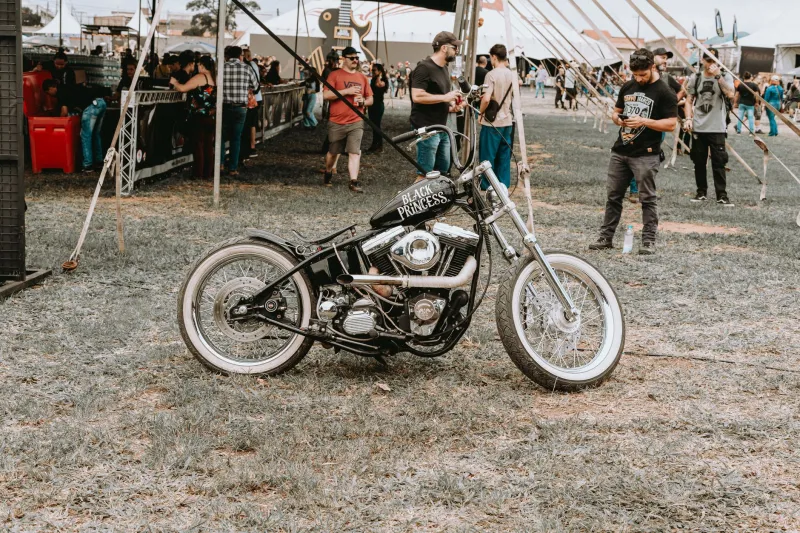
Walk through any serious custom show these days and you'll spot something that would've started a fistfight in a Milwaukee bar twenty years ago. There's a pan-head frame sitting on a Honda CBR front end. A Shovelhead running Mikuni carbs. A knucklehead-era rigid with Nissin brake calipers tucked neatly behind a drum-style hub conversion. Nobody's hiding it. In fact, most of these builders are downright proud of it.
The metric-on-American-iron movement has been simmering for years, but it's hitting a genuine boil right now — and the reasons behind it are more practical, more interesting, and more culturally loaded than most people want to admit.
The Parts Bin Reality
Here's the thing nobody in the purist camp wants to say out loud: Japanese manufacturers have been engineering brilliant components for decades, and a lot of that hardware is now cheap, plentiful, and genuinely superior in specific applications.
Need a front brake setup that actually stops a 600-pound custom without cooking itself on a long canyon descent? You've got options from Brembo, Nissin, and Tokico sitting in junkyards and on eBay right now for a fraction of what a comparable American aftermarket piece would cost. Want a carburetor that you can actually tune without a degree in black magic? Mikuni and Keihin have been building idiot-proof, highly adjustable carbs for decades that bolt up with an adapter plate and a little patience.
Custom builders — especially the ones working on budgets rather than trust funds — figured this out a long time ago. The metric stuff works. It's available. And it's affordable.
The Technical Rabbit Hole
Of course, none of this is plug-and-play. That's part of what makes it interesting.
The fastener issue alone is a rabbit hole that'll eat your entire weekend. American bikes traditionally ran SAE hardware — standard inch-based threads throughout. Japanese machines are metric, obviously, which means mixing the two requires careful planning, thread inserts in some cases, and a willingness to keep two separate sets of wrenches on your bench at all times. More than a few builders have learned the hard way what happens when you cross-thread a metric bolt into an SAE boss — usually at the worst possible moment, usually in the dark, usually with company coming over.
There's also the geometry question. Dropping a Japanese sportbike front end into a vintage American frame isn't just a visual decision. You're changing rake, trail, and handling dynamics in ways that can make the bike feel like a completely different machine — sometimes better, sometimes terrifying. Builders who do this well spend serious time with a tape measure and a geometry calculator before they ever touch a welder.
Brake line routing, electrical compatibility, throttle cable length, footpeg positioning — every one of these details becomes a puzzle when you're mixing parts from two completely different engineering traditions. The builders who are good at this stuff genuinely love the puzzle. That's kind of the whole point.
The Purist Pushback
Let's be honest about the blowback, because it's real and it's loud.
There's a segment of the traditional American bike community that views this trend as somewhere between sacrilege and cultural appropriation. The argument usually goes something like: these are American motorcycles, built on American engineering tradition, and dropping in foreign parts undermines the identity of the machine. Some show judges have quietly penalized bikes for using non-American components, even when the execution was flawless.
There's also a generational element at play. Older builders who grew up treating Harley-Davidson as a near-religious institution — who remember when riding a Japanese bike was genuinely controversial in certain circles — have a harder time embracing the hybrid approach. That's understandable. Culture doesn't change overnight, and identity runs deep in this community.
But here's what the purists are up against: the bikes are performing better. They're stopping better, handling better in some configurations, and proving more reliable in daily use. It's hard to argue with results when someone pulls up next to you at a rally and their brake fade-free setup just saved their life on a mountain pass.
Why the Young Builders Are Leading the Charge
The builders most enthusiastically embracing this approach tend to skew younger — riders who grew up in an era where brand loyalty was less tribal and function mattered more than flag-waving. These are guys and women who might have learned to wrench on a Yamaha before they ever touched a Harley, who don't carry the same cultural baggage, and who approach a build like an engineering problem rather than a heritage project.
For them, the vintage American frame is the starting point — the bones, the soul, the visual identity of the machine. But everything else is fair game. If a Kawasaki ZX-6 front end gives them the handling they want, that's what goes on. If a set of Japanese aftermarket shocks transforms the ride quality, they're not losing sleep over it.
This perspective is actually pretty consistent with how custom building has always worked at its best. The original choppers of the '60s weren't built to preserve anything — they were built to improve on what the factory gave you, by any means necessary. The metric stuff is just the latest tool in that tradition.
The Show Floor Verdict
At events like the Born-Free show in California or the One Moto Show up in Portland, you're seeing this hybrid approach celebrated rather than condemned. Builders who execute it well — who make the Japanese components look intentional and integrated rather than cobbled together — are winning awards and generating serious buzz.
The key word is integration. A Japanese front end that looks like it was grafted on with no thought is still a bad build. But a builder who takes the time to make a Suzuki GSX-R fork setup feel native to a vintage Shovelhead frame — matching finishes, cleaning up the lines, making it all feel inevitable — that's craft. That's the kind of work that gets people leaning in for a closer look.
Where This Goes From Here
The metric-on-American-iron trend isn't going away. If anything, as vintage Japanese bikes age into the collector and parts-donor market themselves, expect to see even more cross-pollination — Honda four-cylinder powertrains in American-style frames, Kawasaki triple engines in rigid chops, things that would've been unthinkable a decade ago.
The community is going to keep arguing about it. That's fine. Argument is part of what keeps custom culture alive and honest. But in garages from Burbank to Brooklyn, builders are going to keep reaching for the best available parts — wherever they come from — and turning out machines that ride as good as they look.
And honestly? That's exactly the kind of built-different energy this scene needs.